Freezer Repair in South Florida
Professional repair for chest freezers, upright freezers, and commercial units. We fix cooling failures, frost buildup, compressor issues, and more.
Freezers come in two shapes that fail in different ways. An upright freezer is usually frost-free: an evaporator behind the back panel, a fan that pushes its cold air through the cabinet, and a defrost system — heater, termination thermostat, and a timer or control board — that melts the frost off the coil at intervals the timer or board sets. When the defrost side fails, the coil ices over, the air stops moving, and the freezer warms even though the compressor never stops. A chest freezer is simpler: manual defrost, cooling coils wrapped in the cabinet walls, and a lid that keeps cold air in when it opens, which is why a chest holds temperature longer through a power cut. Its faults are mostly the sealed system, the start relay and overload, the thermostat, and the lid gasket. In South Florida the room around the freezer matters as much as the machine. Garage and patio freezers sit in heat and humidity that push the compressor hard and load the door seal with moisture, so a worn gasket shows up quickly as frost. We check temperatures, the defrost cycle, airflow, the gasket, and the start components before deciding whether a sealed-system repair is worth it.
Freezer repair by city
Each freezer city page covers what freezers there need:
Common freezer problems we fix
Not Freezing
Freezer running but not reaching proper temperature. Could be a compressor issue, low refrigerant, or a faulty thermostat.
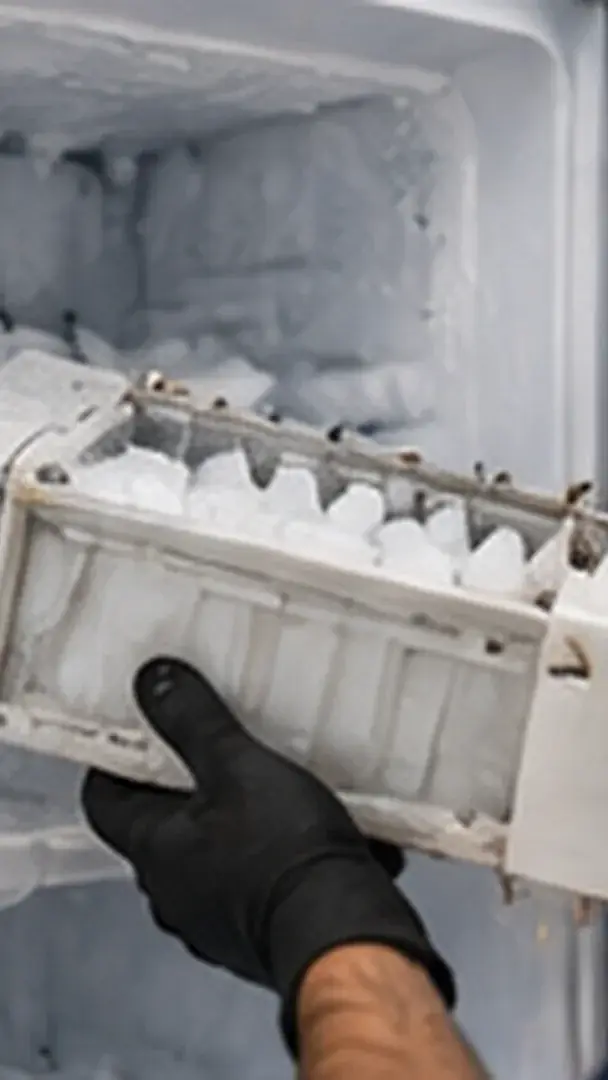
Frost Buildup
Excessive frost or ice accumulating on walls and shelves. Usually a defrost system failure — heater, timer, or thermostat.
Freezer Too Warm
Temperature rising above safe levels. Often caused by a failing compressor, dirty condenser coils, or a bad door seal.
Strange Noises
Clicking, buzzing, or grinding sounds. May indicate compressor problems, a failing evaporator fan, or ice buildup on fan blades.
Leaking Water
Water pooling under or inside the freezer. Typically a clogged defrost drain, cracked drain pan, or damaged water line.
Freezer Runs Constantly
Compressor never cycles off. Usually caused by a bad door gasket, dirty coils, faulty thermostat, or low refrigerant.
Frost Pattern on the Back Panel
On a frost-free upright, a heater melts the evaporator's frost on a timer or board schedule, and a defrost termination thermostat ends the cycle. Frost covering the back panel, or air from the vents that is barely cold, means that cycle has stopped; the heater, the thermostat, and the timer or board are each tested before one is ordered.
Chest Freezer Sides Hot or Sweating
Many chest freezers have no outside coil: the condenser tubing runs inside the cabinet walls, so the sides feel warm while it runs, and that is normal. Beads of water on the outside, or a band of ice just inside the lid, point instead to a lid gasket that no longer seals or hinges that let the lid sit high.
Garage Freezer Struggles in Summer
A freezer rejects its heat into the room. In a closed South Florida garage that can be far hotter than the kitchen, the compressor runs longer, the condenser runs hotter, and the start relay and overload work harder. Dust and lint on the condenser make it worse. We check the condenser fan and coils, the start components, and how much air the unit has around it.
Freezer brands on our schedule: Amana freezer repair, Danby, Frigidaire freezer repair, GE freezer repair, Haier, Kenmore freezer repair, LG freezer repair, Maytag freezer repair, Midea, Samsung freezer repair, Sub-Zero freezer repair, Whirlpool freezer repair.
How it works
- Freezer calls go to (754) 888-5560 or the booking form; say upright or chest, and garage or indoors
- The freezer visit goes into the first open window that suits you, ahead of routine work when food is at risk
- The technician probes the freezer cabinet, watches the defrost cycle and checks the gasket before the start relay and compressor
- The freezer repair is priced once, and nothing is replaced until you say yes
- Freezer labor is warranted 90 days and the freezer part 360 days
How long a freezer should last
Ten to fifteen years for chest and upright freezers, and chest models often outlast that — they are simple machines and they open less often than a refrigerator does.
Is the freezer worth repairing?
Thermostats, start relays, fans, defrost components and door seals are all economical repairs, and a chest freezer is worth fixing well past the age at which we would replace a refrigerator, because there is so little else in it to fail. A sealed-system or compressor failure past about twelve years is where the arithmetic turns, and on a garage freezer here it turns sooner — the ambient heat is hard on a machine already at the end of its life.
What moves a freezer repair price
Chest or upright, and where it lives. A garage or unconditioned space is harder on the equipment and can be part of the fault rather than a detail. Relays, thermostats and fans are stocked; sealed-system work is ordered and scheduled.
What the freezer visit looks like
One visit. If the freezer is full, we will tell you when booking what to expect so the contents are not standing in the heat longer than necessary.
Frequently asked questions about freezer repair
How much does freezer repair cost?
A defrost heater, a termination thermostat, a fan or a start relay is a modest freezer repair. A compressor or a refrigerant leak on an upright or chest freezer is the large one, and it is where we compare the freezer with a new unit with you. The $69 freezer diagnosis is credited to the repair, and the freezer price is fixed before the sealed system is opened.
Is it worth repairing an old freezer?
A defrost part, fan, gasket or start relay is worth fitting to most freezers that are otherwise sound. The harder freezer decision is a compressor or a leak on an older upright or chest model, and we weigh that with you at the freezer, using its build date from the serial label.
Why is my freezer not freezing but the fridge works?
On a combined refrigerator, a freezer that warms while the fresh-food side holds usually has frost choking its evaporator or a fan that has stopped, and the defrost heater, sensor and fan motor are tested in that order. A standalone freezer has no fridge to compare, so its frost pattern tells the story instead.
Can you repair chest freezers and upright freezers?
Yes. Chest freezers, frost-free uprights, freezer drawers and built-in freezer columns are all on our freezer schedule; a chest freezer's coils are in its walls, so its diagnosis leans on the start relay, thermostat and lid seal.
Can a freezer live in a South Florida garage?
It can, if the model is rated for the room it is in. Every freezer is designed for a range of surrounding temperatures, listed in its manual, and some are sold as garage-ready for that reason. Give it the clearance the manual asks for at the back and sides, keep it out of direct sun, and vacuum the condenser coils if it has them. A standard model in a closed, unventilated garage will run hard all summer.
How do I check my freezer's door seal?
Close the door or lid on a sheet of paper at several points around the gasket and pull it out. It should drag; if it slides out freely, cold air is leaking there. Frost building up near one edge, or a door that springs back open, tells the same story. A torn or flattened gasket is replaced; a door that sags on its hinges is realigned first.
How long will the food last if my freezer has stopped?
USDA guidance is that a full freezer holds a safe temperature for about 48 hours with the door kept closed, and a half-full one for about 24. Keep it shut, and use an appliance thermometer to check: food that still has ice crystals or reads 40°F or below can be refrozen.
Phone us about your freezer: (754) 888-5560 — freezer bookings also online.